Will is taking over the blog today, and sharing his tank knowledge so enjoy! He wrote, researched and edited this Camp Mabry Armor Row post, entirely on his own. – Priscilla
Hello. This is my first post and it is about my favorite subject: tanks. Below you will see the line of many armored vehicles, medium tanks, main battle tanks, armored personnel carriers, recovery vehicles, and self propelled artillery. It really is just AWESOME.
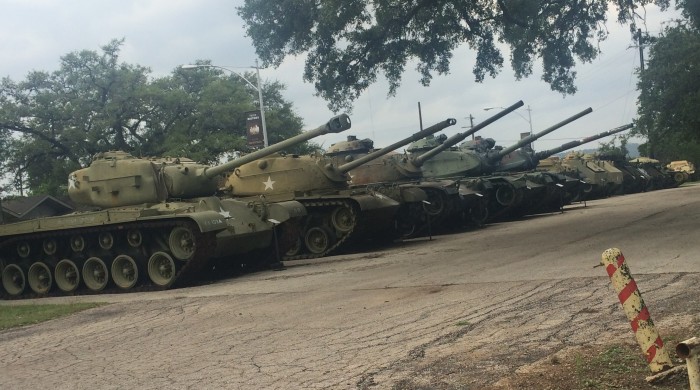
From left to right, the tanks you see are the M26 medium tank, M48 medium tank, M60 Main battle tank, M60A1 main battle tank, and finally the M60A3 main battle tank.
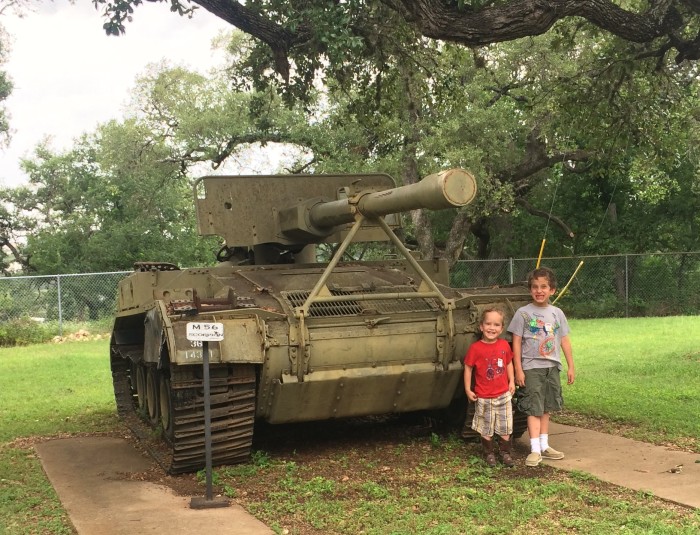
Here is the M56 Scorpion, an unarmored Tank Destroyer, meant to be airdropped in large numbers. It is an open cabined tank, meaning the crew has no protection except for the gun shield. It has a powerful 90mm M54 gun.
from Wikipedia:
The M56 was manufactured from 1953 to 1959 by the Cadillac Motor Car Division of General Motors for use by US airborne forces, though the vehicle was eventually used by the Spanish Navy Marines, Morocco and the Republic of Korea as well. With a crew of four (commander, gunner, loader and driver), the M56 weighed 6.4 tonnes (14,000 lb) empty and 7.7 tonnes (17,000 lb) combat-loaded. It had infrared driving lights but no Nuclear, Biological and Chemical (NBC) protection system and was not amphibious.
The M56 was a fully tracked vehicle with rubber-tired run-flat road wheels and front drive sprocket wheels. It was powered by a Continental A01-403-5 gasoline engine developing 200 brake horsepower (150 kW) at 3,000 rpm, allowing a maximum road speed of 28 miles per hour (45 km/h) and a maximum range of 140 miles (230 km). Twenty-nine rounds of main gun ammunition was carried.
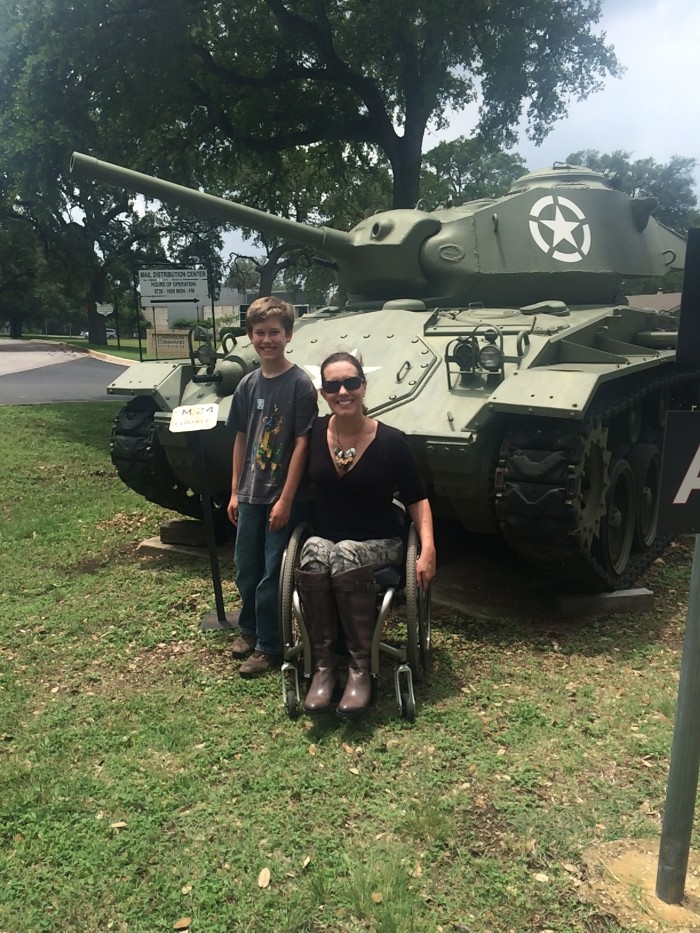
This is the M24 Chaffee, an American light tank designed to replace the M5 stuart light tank. Look where the gun is, the gun mantlet has such thick armor. Here is an article I read a long time ago.
From the War Thunder Game’s website:
During the early stages of the Second World War the US Army called for a new light tank which would replace the rapidly aging M5 Stuart. Specifications for the new vehicle demanded that it was to be armed with a 75mm gun, that the weight would not exceed 20 tonnes and that it was to use the same powertrain as the M5. Work on a new project, designated T24, started in April 1943 and a wooden mock-up was ready in May 1943. After approval from the US Army, production of two prototypes was ordered. The new vehicle made a good initial impression and the Ordnance Committee ordered serial production of 1000 vehicles under the designation “M24 Chaffee”, in honour of Lieutenant General Adna R. Chaffee Jr. Two plants were given the order for the production of the Chaffee – the Cadillac plant and the Massey-Harris plant. Both of these were, however, still manufacturing the M5 Stuart tank in 1943 and only after the phasing out of the M5 from production in 1944 did the serial production of the Chaffee begin.
Deliveries of the Chaffee to operational units were scheduled in August 1944 but technical issues and confusion due to the Battle of the Bulge caused significant delays. The first large deployment of the Chaffee thus occurred at the end of February 1945 during Operation Grenade. The tank was deployed in Italy as well, but until March 1945 only a limited number were available. As demanded, the Chaffee retained the powertrain from the M5 Stuart – two rear-mounted gasoline Cadillac Series 44T24 V8 engines, coupled together and producing a total power output of 220 horsepower at 3400 RPM, controlled via a 8-speed Hydra-matic automatic transmission. In contrast to the Stuart chassis, conceived in the 1930’s, the Chaffee received a new torsion bar suspension and wider tracks, both improving cross-country performance. The total weight reached 18.4 tonnes and while this fulfilled the request it placed restrictions on armour protection – the maximum thickness was 1.5 inch (~38 mm) on the turret front and gun mantlet. The frontal armour, albeit well sloped, was only 1 inch (~25.4 mm) thick. The Chaffee’s maximum speed was 35 mph (56.3 km/h) on the road and 17 mph (27.4 km/h) across terrain.The crew consisted of four men – commander, driver, gunner and loader (some sources mention a fifth crew member, stationed next to the driver’s seat and acting as a radioman/machine gunner). The primary armament consisted of a 75 mm M6 gun, placed in a three-man turret. This weapon, originally designed for use in the B-25H Mitchell medium bomber, was a significantly lighter version of the standard M3 gun used on the M4 Sherman (only 396 lbs or 180 kg of weight, compared to 884 lbs or 401 kg of the original weapon), and when using the M61 APCBC projectile with a muzzle velocity of 2030 feet per second (619 m/s), the gun was able to pierce 2.71 inch (69 mm) of armour at a range of 1500 feet (457 meters). As a secondary armament, two .30 (7.62 mm) M1919A4 machine guns were mounted – one coaxially to the gun, and one next to the driver. Additionally, one flexible .50 (12.7 mm) Browning M2 machine gun could be mounted on top of the turret. 48 rounds for the main gun and 3750 .30 rounds were carried, along with 440 .50 rounds.
In service the Chaffee was well liked for its chassis, speed and cross-country ability, and found its niche as a reconnaissance tank – later, it was also used as a light infantry support vehicle. Due to its light armour it was at an obvious disadvantage when facing enemy tanks, but by this stage of the war encounters with German armour were rare. During one recorded incident, however, two M24’s from F Platoon, 4th Cavalry Regiment stumbled upon two Panthers at Domagen and before the Germans had time to react the Chaffees opened fire and dispatched both Panthers with flank shots.From 1944 to August 1945, 4731 Chaffees were manufactured, but only a small number were used in the Second World War due to slow deployment; they never fully replaced the existing M5 Stuarts. The M24 was eventually rushed back into frontline service during the Korean War, as Chaffees were the only armoured vehicle available when North Korea attacked. Against the vastly superior North Korean T-34-85 tanks, Chaffees suffered heavy losses until M4A3E8 and M26 Pershing tanks arrived to replace them.
As the US career of the Chaffee was coming to its end, its foreign career was merely starting. More than 4000 M24’s were exported to 28 countries and used in a multitude of conflicts. The French used Chaffees at Dien Bien Phu, South Vietnamese M24’s fought during the Battle of Hue, and in the last recorded combat usage Pakistan deployed M24’s during the Indo-Pakistani war in 1971. Some armies kept their Chaffees well into the 1990’s and Uruguay have kept them in service until the present day, although in a modernised variant. On the M24’s chassis, multiple vehicles were also built – such as the M19 self-propelled anti-air gun, the M37 self-propelled howitzer and more, including modified foreign versions.
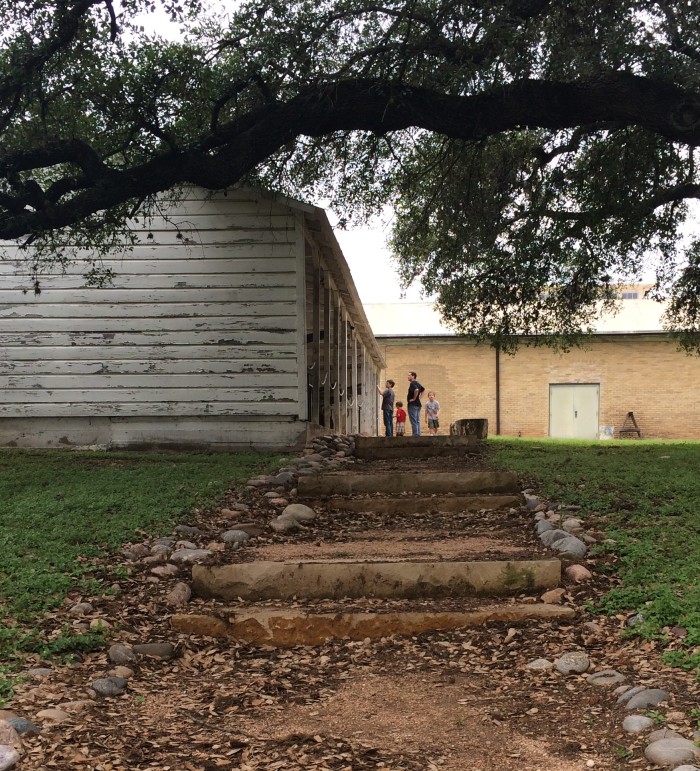
Here we are looking at various assault guns such as a french 75mm howitzer, and an american 105mm field howitzer.
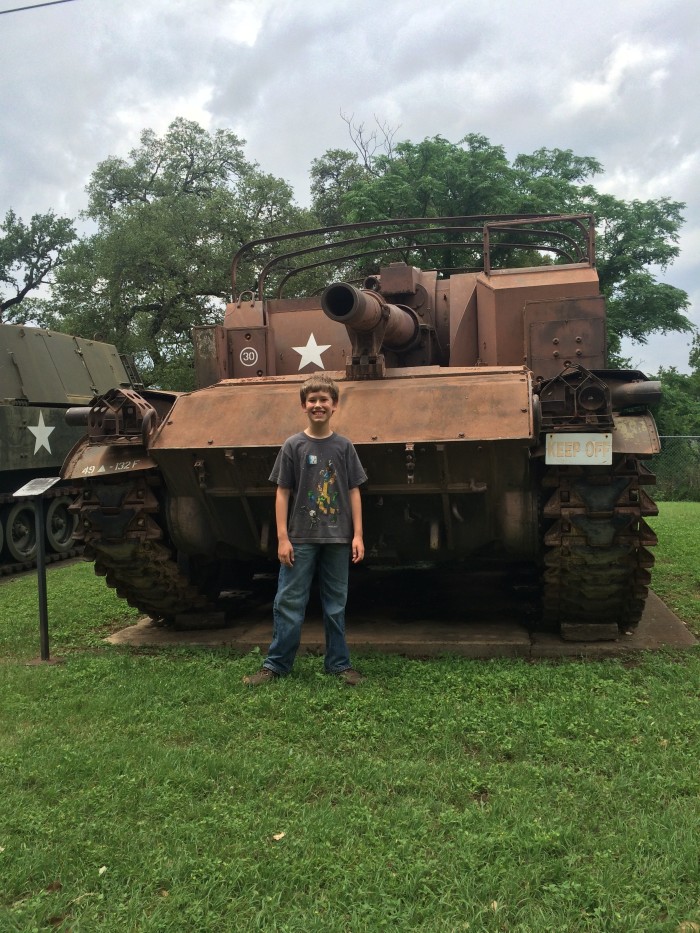
I don’t know much about this tank. This is the M44 SPG (self propelled gun) with a 155mm howitzer.
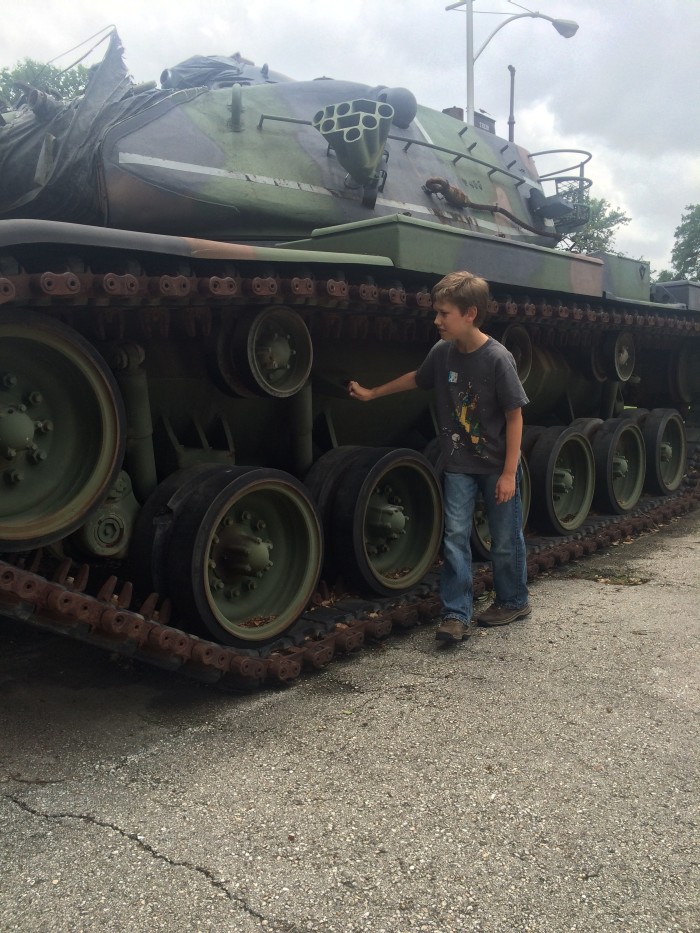
These are the tracks of the M60A3 Patton Main battle tank. look at those massive steal links, and this massive wheels, and the suspension for the wheels. All of that has to hold up around 100,000 pounds!!!
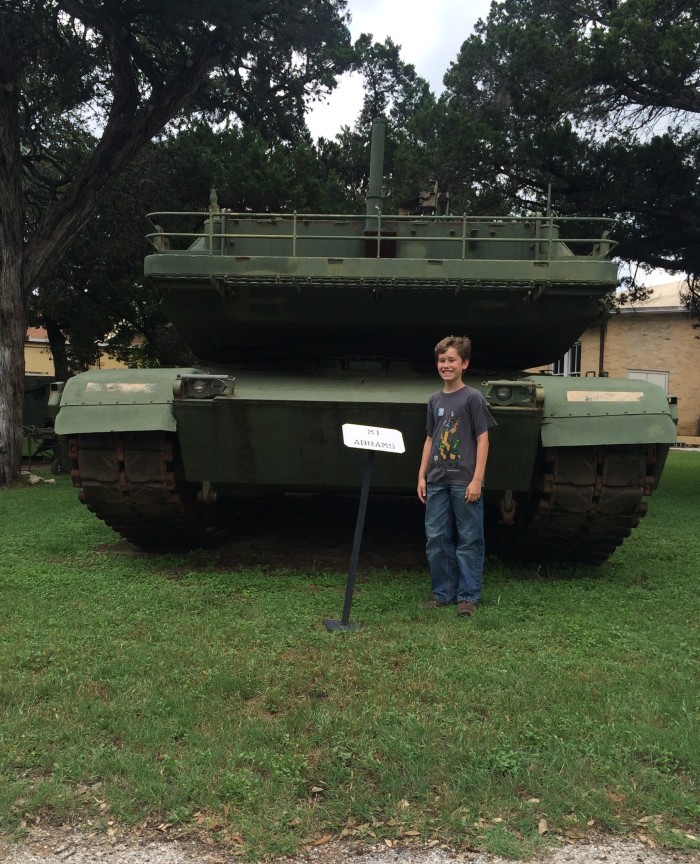
Now this tank is modern. this is one of the worlds most protected tanks, with thick armor and angled armor, firepower, and some mobility. This is the tank that is in service today, with a 120mm cannon? Not sure, but it sure is a monster of a tank. Though the T14 Armada might have more crew protection because it has a separate armored capsule inside the tank, so in theory, even if the turret was blown of the two person crew would be OK.
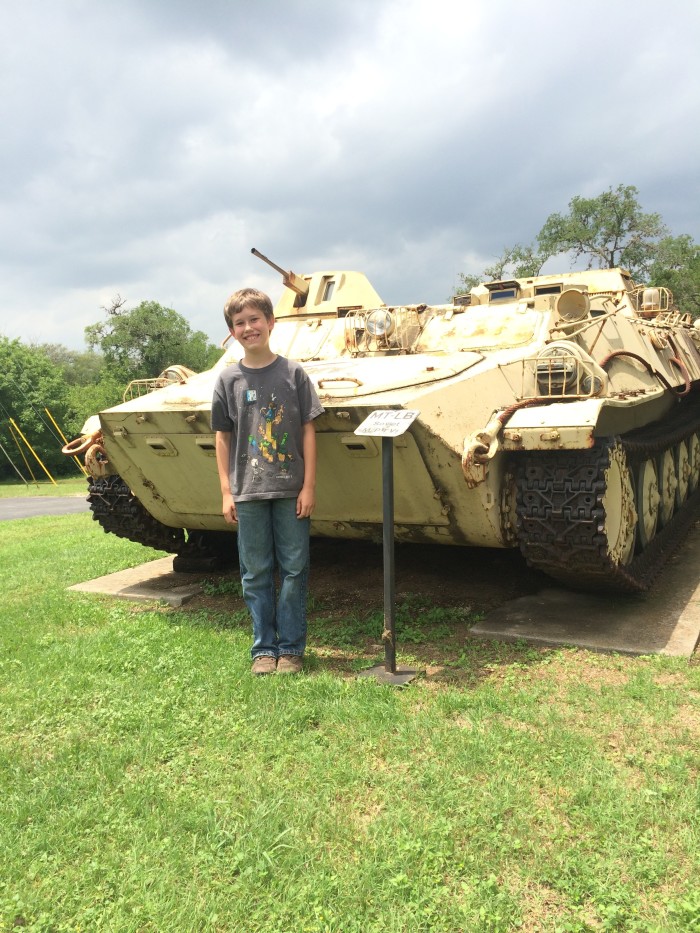
All I know about this tank is that it is a captured soviet armored personal carrier with probably around 20mm of armor, based on how thick the armor was when i was there looking at it.
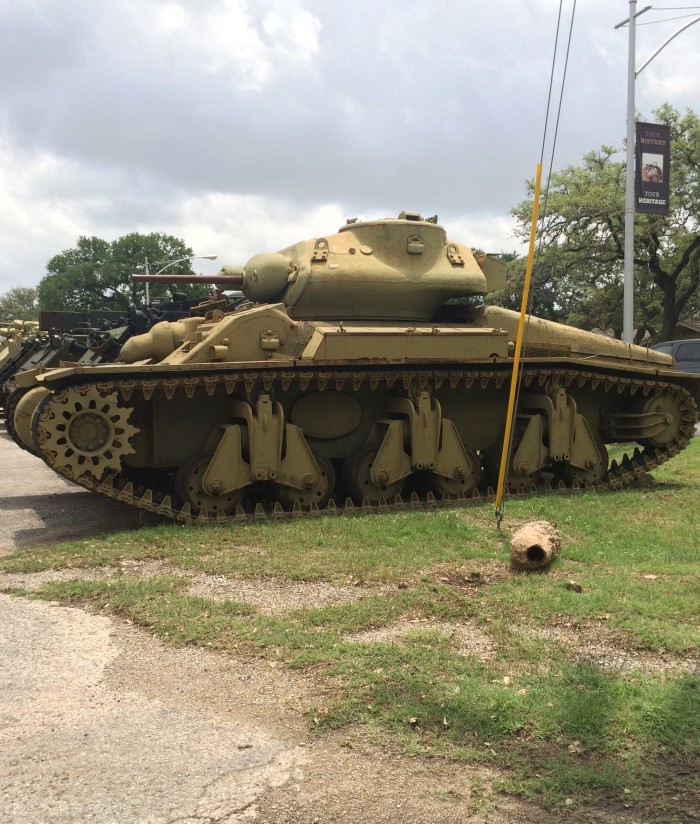
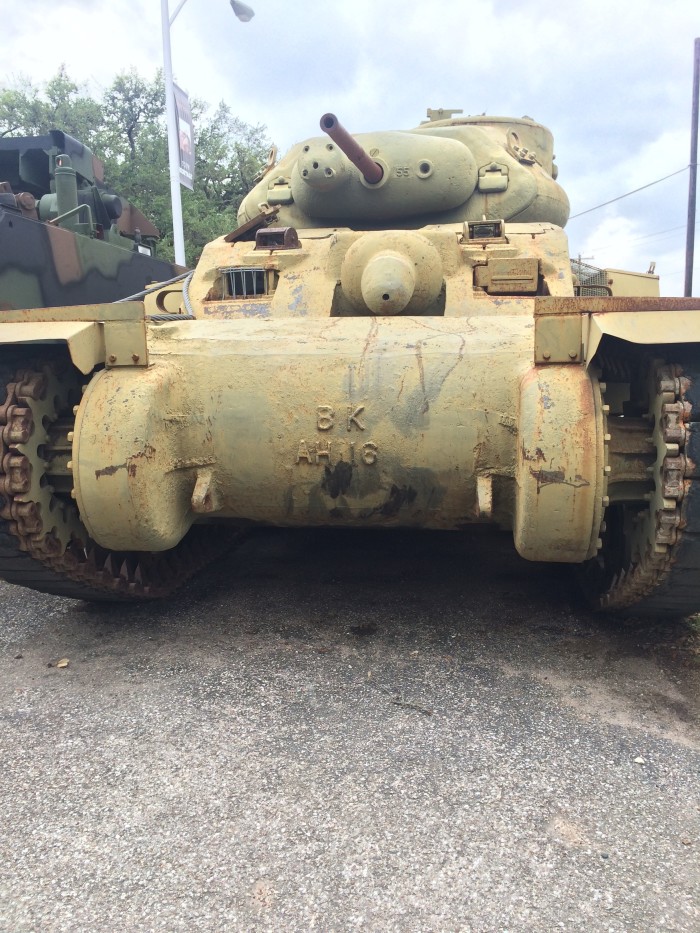
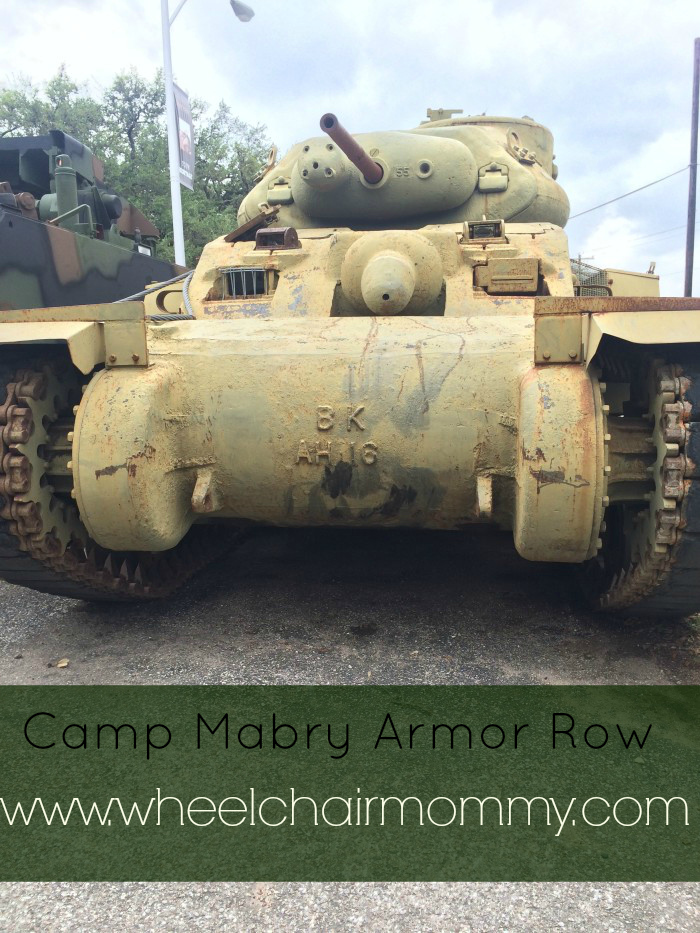
This is the Australian cruiser Mk 1. I do not know much at all, that was the first time I ever saw it. According to wikipedia it was designed in 1942 and 65 were built. Now, today only three survive of which this is amazingly one. It has a little over two inches of armor on the front and turret, and a two pounder gun. I have no clue why they put so much armor on the machine gun. The turret looks like it has LOTS of British influence and the bottom chassis looks like an M4 chassis.
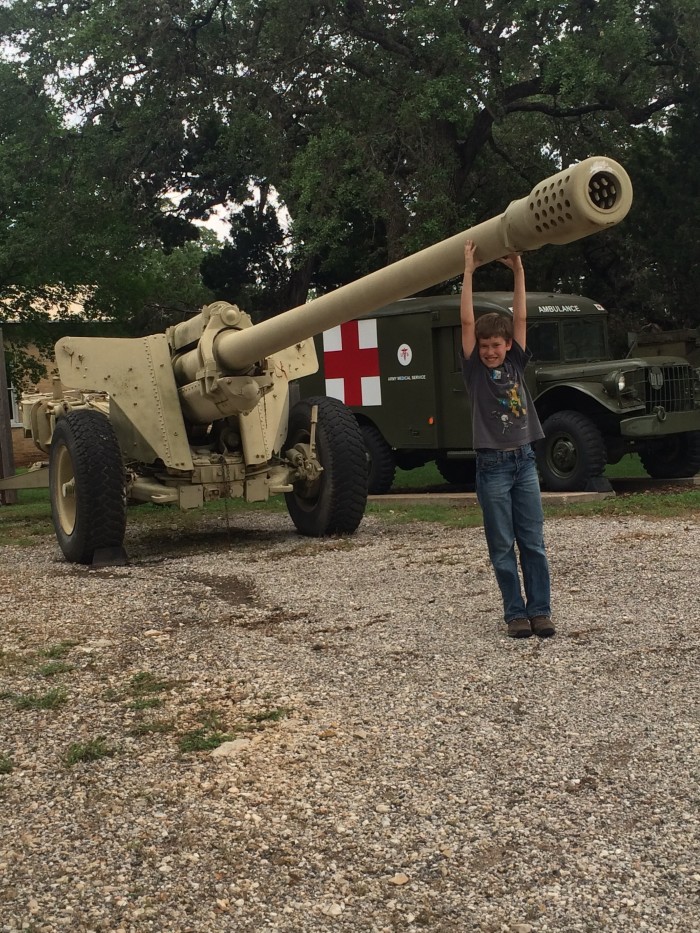
Now this is a cool field gun, probably 155mm with a thin gun shield and I think it was supposed to be towed?
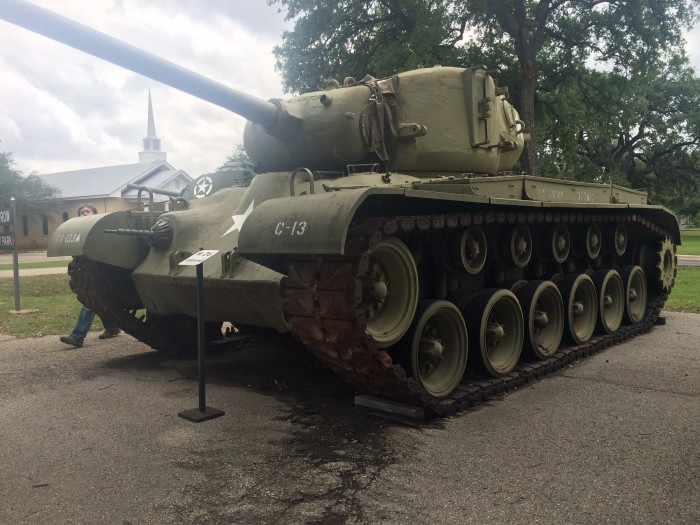
This is the M26 Pershing. This tank was introduced in either 1944 or 1945, I forget which though I think it was 1944. It was made to combat Tiger 1 and Tiger 2 tanks, monsters to the american and soviet forces. during WWII it was classified as a heavy tank but later it was classified as a medium tank.It has around 100mm of armor in the front, with nearly impenetrable turret armor, between the massive gun mantlet and the cast turret itself.it has a large 90mm gun, larger than the Tiger 1 tanks gun which was 88mm. this was a truly amazing tank, i was surprised to see it. It was also used in the Korean war.
Linking up at The Quintessential Mommy’s Link Up Party!